


- Navigator
- Northeast
- Rural
- Entrepreneurship and Innovation
 It’s been some time since we completed an entrepreneurship-led economic development strategy for Cattaraugus County, NY, and as part of a client check-in and reflection on implementation, I wanted to step back and look at what’s unfolded since the planning work concluded.
If you work in economic development in Upstate New York, or in any rural-leaning region, it’s worth paying attention to what’s been happening in and around Olean, NY. Cattaraugus County offers a grounded, practitioner-level example of what entrepreneurship-led economic development looks like when a community treats its ecosystem as one connected system and commits to operating that way.
In 2023–2024, Cattaraugus County, led by the Olean Business Development Corporation (OBDC), undertook a countywide entrepreneurship-led economic development strategy with Camoin Associates. The goal was not to introduce entrepreneurship to the region, but to create a shared operating framework that aligned existing efforts across entrepreneurship, workforce, and traditional economic development functions.
Before the strategy, the county already had a great deal of momentum:
What was missing was not activity, but alignment, particularly between entrepreneurship-led efforts and the more traditional elements of the economic development system.
The strategic planning process helped turn an informal network of committed organizations into a more coordinated team with shared priorities, clearer roles, and defined pathways for action. It mapped the full business lifecycle from startup and growth to retention and succession, and surfaced where support was strong, where it was fragmented, and where closer coordination was necessary to achieve greater results.
In a rural context, this intentional process of connecting and strengthening the network matters. I’d go as far as to argue it’s most important for rural regions to give partners a common language and structure for working together.
By clearly defining goals, initiatives, and ownership, and by demonstrating that partners were prepared to operate collectively, the County’s entrepreneurship-led economic development strategy positioned it and its partners to pursue implementation funding.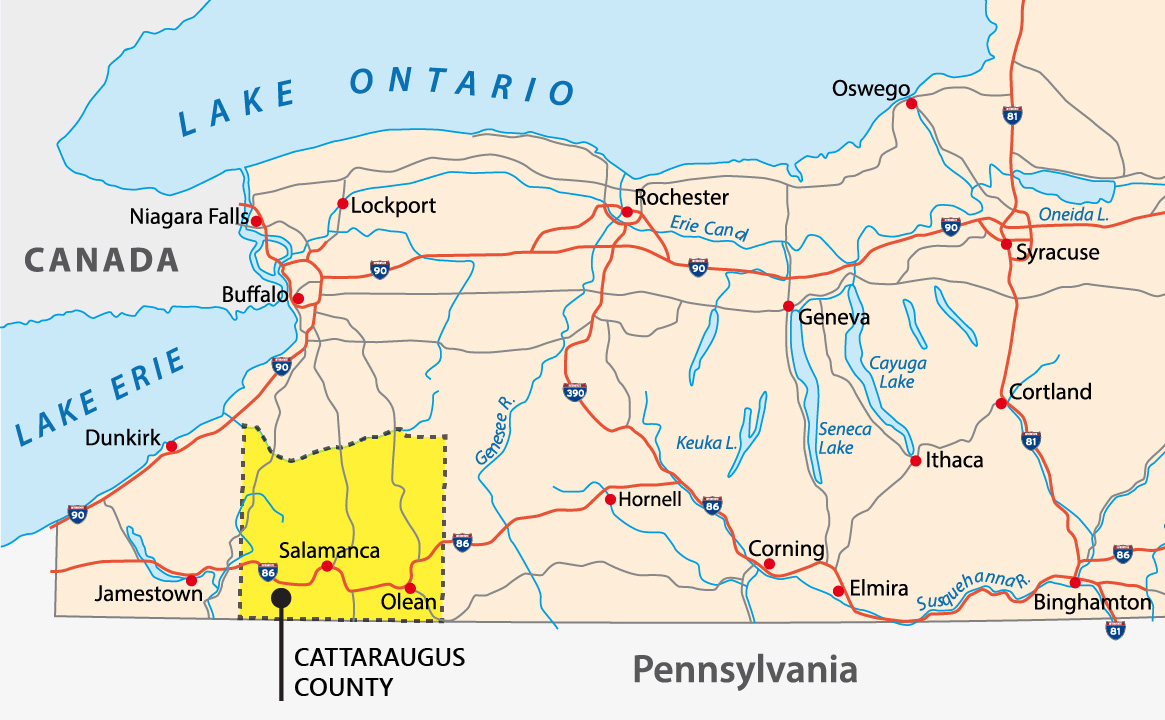
One of the clearest insights from the strategy was that entrepreneurship support in rural communities must span the entire business lifecycle—including transition and succession—not just startup and early growth.
The OBDC has long focused on supporting new and growing businesses. But the strategy process elevated a persistent gap: business exits. In small towns, succession planning is often invisible. Owners don’t always announce they’re thinking about exiting, and when transitions fail, businesses don’t wind down … they close.
In response, the OBDC leaned into what is referred to as entrepreneurship through acquisition, helping entrepreneurs buy and grow existing local businesses while supporting owners who want to exit responsibly.
That work was formalized in 2025 through a $56,000 Springboard Prize Competition grant, funded by the Ralph C. Wilson, Jr. Foundation. The funding supports education, matchmaking events, and cost offsets for buyers and sellers, while positioning the OBDC as a trusted intermediary in the process.
On the front end of the entrepreneurial lifecycle, the Laine Business Accelerator (LBA) continues to do steady, compounding work.
Now in its fifth year, the LBA has:
Each year, eight businesses receive seed funding and participate in a 13-week cohort-based program supported by Jamestown Community College, St. Bonaventure University, and local professionals.
From a practitioner standpoint, what stands out is not just the outputs, but the design:
A recent ownership transition of Go To Meals, an early LBA business, shows how a connected ecosystem can be activated at critical moments. Instead of closing or being sold to a corporate buyer when the founder decided to pursue other entrepreneurial endeavors, Go To Meals was sold to a recent St. Bonaventure University graduate, who simply took an entrepreneurship class that sparked his interest. This incredible transition was supported by a combination of mentorship, advisory support, capital access, and higher-education partnerships, all working in tandem.
As collaboration deepened, it became clear that Cattaraugus County’s ecosystem was already behaving like a collective, just without a formal structure.
The CATTalyst Collective emerged as a way to operationalize the alignment established through the strategy, providing a structure through which partners could propose, lead, and execute projects while maintaining shared accountability and coordination.
Supported by a $1 million, four-year investment from the Ralph C. Wilson, Jr. Foundation, the Collective brings together leaders from entrepreneurship, workforce, education, and economic development. It operates intentionally separate from county government, while remaining closely aligned with county priorities.
The Collective’s focus areas mirror the strategy’s core themes:
The result was not a new organization layered onto the system, but a clearer way for existing organizations to work together, deploy resources, and measure progress.
Cattaraugus County didn’t “solve” entrepreneurship-led economic development. What it did was to treat entrepreneurship, workforce, retention, succession, and placemaking as one connected system.
The strategy served as a capacity-building intervention: aligning people and institutions that were already doing good work, clarifying roles, and creating the conditions for collective execution.
Not everyone in Cattaraugus County is an entrepreneur. But the ecosystem behaves entrepreneurially—adaptive, collaborative, and willing to test and adjust. That didn’t happen by accident. It happened because the community chose to grow from within and built the structure to do it.
Learn about our Entrepreneurship and Innovation services
Christa O. Franzi, CEcD, is Vice President and Director of Entrepreneurship at Camoin Associates. She has more than 15 years of experience developing economic development strategic plans, Main Street and downtown revitalization initiatives, and stronger, more equitable entrepreneurial ecosystems for communities across the country. She serves as Ambassador for Right to Start, a national nonprofit organization focused on making entrepreneurial opportunities available for all, and directs the New York Basic Economic Development Course. Christa holds a master’s degree in geography and environmental planning from Binghamton University.
📍 Related Articles:

Real Estate Development and Housing
In 2025, the City of Albany, NY, partnered with Camoin Associates to complete a citywide housing audit that offers lessons for other mid-sized, moderate-growth cities about how to align housing policy with local economic realities while advancing equitable outcomes.

Industry Analytics and Strategy

Entrepreneurship and Innovation
Your resource for understanding today and looking toward tomorrow