


- Navigator
- Construction and Utilities
- Real Estate Development and Housing
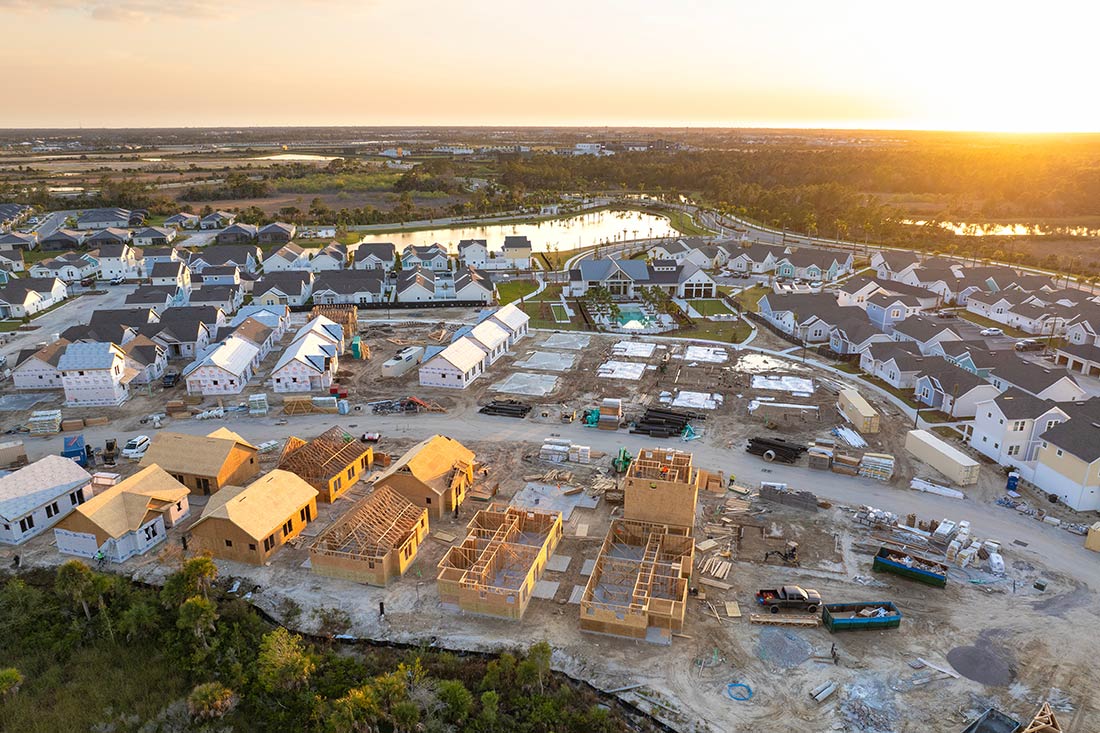
Housing gets built when three primary elements align: land, money, and timing.
Communities that make land work harder, close the financing gaps without breaking the bank, and run approvals on a predictable schedule see real results. Those that don’t do these things end up with rising costs, stalled projects, and unmet demand.
Camoin Associates’ work across the country shows a consistent playbook—and clear results when municipalities follow it.
Land is the foundation. Without buildable, appropriately zoned sites, nothing else matters. Zoning and site rules determine whether realistic formats—duplexes, townhomes, small multifamily—fit the ground.
Parking mandates, oversized lots, and single-use zoning eat up opportunity. When land is planned around infrastructure and allowed without requiring planning board approvals, developers can focus their money and time where it matters.
The Bottom Line: Land that is ready for development sets the stage for money to flow efficiently and for time to be spent building, not negotiating.
Even the best land doesn’t get built without a workable pro forma. Rising costs and high interest rates leave projects underwater.
Municipal tools, such as density bonuses, fee relief, public land priced to reality, and infrastructure financing, can make money go further and attract private investment.
When financing works, developers can move quickly, shortening timelines.
The Bottom Line: Money makes land usable and time productive; without it, even shovel-ready sites sit idle.
Time is money. Every month that a project is delayed adds risk and cost. Clear checklists, firm timelines, government approvals, and a one-stop portal turn uncertainty into a predictable cycle time.
When developers know how long approvals take, they can plan their capital deployment and schedule construction with confidence.
The Bottom Line: Land and money may be ready, but projects can only move from paper to construction with predictable timelines.
Undevelopable land doesn’t deliver housing. Roads, water, and sewers have to be ready. Investing capital to make sites shovel-ready reduces developers’ financial and timing risks. Prepped sites shorten timelines, improve returns, and turn opportunity maps into units.
The Bottom Line: Infrastructure converts land into deliverable projects and makes money and time work harder.
Existing homes represent an immediate housing supply. Rehabilitation, weatherization, and code enforcement stabilize neighborhoods while new construction ramps up. In these efforts, land is already in use, cost is modest compared to new builds, and timelines are short.
The Bottom Line: The fastest, cheapest housing units are often ones you already have, which helps leverage land, money, and time more efficiently.
Even with land, money, and timelines in place, housing only gets built if someone can deliver it. Most communities rely on small and mid-sized builders.
Providing financing support, pre-development help, and workforce training ensures these local teams can turn plans into units on schedule.
The Bottom Line: Delivering new housing units depends on capable people who use land, money, and time efficiently.
In tourism-driven economies, second homes and short-term rentals absorb land and capital. Time spent negotiating approvals for these uses slows the delivery of year-round housing.
Communities that set clear rules around seasonal and short-term rental housing protect the long-term housing supply, making land available, money work, and timelines predictable.
The Bottom Line: Rules are needed to ensure that land, money, and time are used to support residents, not just seasonal demand.
None of the levers work without feedback. Dashboards, annual reviews, and metrics keep land use efficient, money effective, and time well spent. When leaders track outcomes, they can adjust each lever in real time.
The Bottom Line: Measurement ensures land, money, and time are all focused on getting results.
Land, money, and time are the three levers behind every residential development. Plan to organize action around those levers so communities can unlock their housing supply efficiently and predictably:
At Camoin Associates, we pride ourselves on our unique ability to uncover emerging market opportunities unseen by others. We specialize in challenging investment environments and have proven success implementing complex real estate (re)development projects. From conducting a commercial real estate market analysis or housing needs assessment to developing project concepts, attracting developers, and finding funding, we help communities do it all.
Learn about our Real Estate Development and Housing services
John Walker is a Senior Economic Data and Research Analyst at Camoin Associates. He holds a Master of Arts degree in Economics from Northwestern University and a Bachelor of Science degree in Economics and Statistics from the University of Minnesota. He has more than 20 years of experience as an economist and analyst and has worked on numerous real estate development, tax increment financing (TIF), and housing needs assessment projects for public and private clients of all sizes across the country.
📍 Related Articles:

Entrepreneurship and Innovation
If you work in economic development in Upstate New York, or in any rural-leaning region, it’s worth paying attention to what’s been happening in and around the City of Olean in Cattaraugus County, NY.


Organizational Planning
Your resource for understanding today and looking toward tomorrow