


- Navigator
- Northeast
- Sessions and Learning
- Industry Analytics and Strategy
- State

In April 2026, I had the privilege of attending a conference in Maine called Leadership in the High North (2026): Advancing Maine’s Role in the Arctic. The event was hosted by the University of Maine’s School of Policy and International Affairs, the Maine International Trade Center, and the World Affairs Council of Maine.
My initial reason for attending was to learn more about economic opportunities in Maine and other nearby Canadian border provinces. What I ended up learning and taking away was that, and much more.
1. Maine’s academic institutions can support Arctic governance through:
2. Maine already has strong institutional involvement in Arctic issues through organizations such as the University of Maine, the University of New England, and Bowdoin College.
3. A recommended economic strategy is for Maine to integrate Arctic-focused opportunities into its long-term economic development and trade strategies, aligned with the state’s climate goals and targeted industries.
4. Key Arctic-related economic opportunities for Maine include:
5. Strengthening Arctic diplomacy could build on Maine’s existing trade relationship with Iceland and the Port of Portland through enhanced collaboration among policymakers, trade organizations, and diplomatic institutions.
6. One operational challenge identified is that Arctic policy is often driven primarily at the federal level, limiting state and regional involvement.
7. The document recommends that Maine address this challenge by:
8. Three actionable recommendations for Maine include:
An additional benefit of the event is that a learning “badge” was available for those who attended and passed a knowledge assessment following the conference. This may seem trivial, but in today’s world of constant change, it is critical to continually gain new knowledge and understanding and convert it into applied skills. I applaud the conference hosts and in particular, the University of Maine for making the conference not just an event but a learning and skills-building opportunity
Below is a description of the assessment, the assessment prompts, and my full responses for attainment of the badge. I share to provide more details on what I learned and am eager to apply, but also as an example of how skills badges make conferences and convenings more relevant and worth the investment.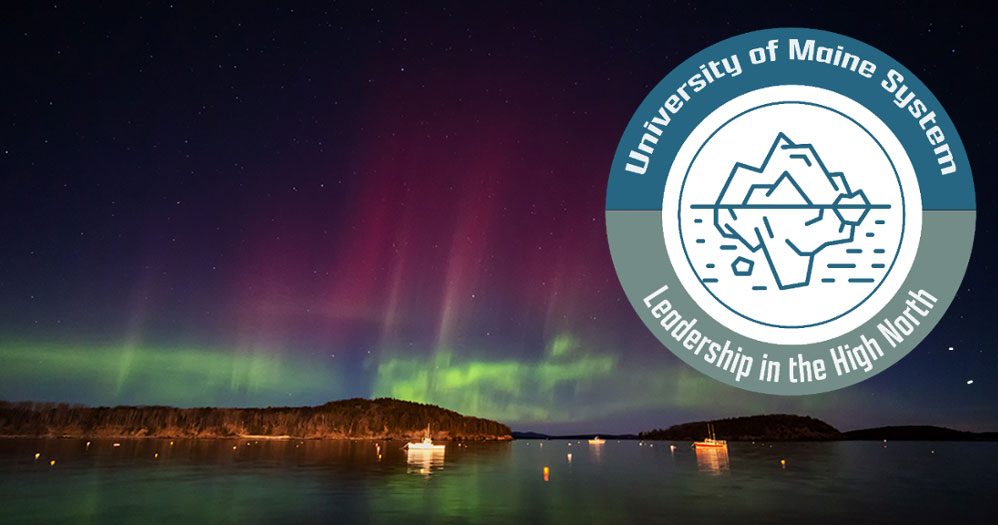
This badge was issued in recognition of the learner’s demonstrated understanding of Maine’s evolving role in Arctic leadership and policy. The learner developed knowledge of Arctic research, economic development, diplomacy, and security through presentations from scholars, policymakers, and other subject-matter experts.
The learner attended the April 2026 symposium Leadership in the High North: Advancing Maine’s Role in the Arctic, convened by the University of Maine’s School of Policy and International Affairs, the Maine International Trade Center, and the World Affairs Council of Maine and applied their knowledge through a written assessment.
The learner is able to synthesize their knowledge to:
The learner attended 7-8 hours of Leadership in the High North symposium presentations, panel discussions, and networking sessions.
The learner was assessed through a short-answer quiz and received a score of 4 or 5 out of 5 in each category on a rubric aligned to the competency standard. The learner’s attendance was documented through attendance logs. Evidence was verified and approved by the symposium planning committee.
Maine’s Role in the Arctic: LIHN Digital Badge Competency Assessment – Jim Damicis’ Submission:
First is through awareness and education. This is one of several core functions of academic institutions and for which Maine has a strong history and network. While Arctic government and policy are known to persons in the field, they are not common topics in the news or among policy practitioners in general. At the conference, I learned that Arctic issues are cross-disciplinary and complex, spanning disciplines such as environment and climate, economics, politics and policy, culture, and security. Through the continuation of conferences, publications, and information that are accessible to the public and practitioners, awareness and understanding of the Arctic and Maine’s role can be increased.
Second, is through research and development. This is also a core function of academic institutions and one in which Maine has a strong history and existing assets. It was evident from the conference and related resources that some of the R&D is very specific and focused, but much involves multidisciplinary and approaches and cross-institutional collaboration. This helps build a strong network for both foundational and applied research and development, and for its impact and reach.
As evidenced at the conference, many of Maine’s academic institutions are already playing a strong role in Arctic Issues, including UMaine, the University of New England, Bowdoin College, and others, and are collaborating both within the state and globally. Success in leading to policy and governance that furthers the objectives will require consistent funding, a collaborative network, awareness, and openness to global and indigenous culture and objectives, and leadership by policymakers who are willing to champion the issues.
Maine has a regularly updated ten-year economic plan, along with multiple trade strategies. Trade in these strategies typically focuses on Canada and, generally, the globe. In its next update to its ten-year economic plan, Maine can, and should, include specific strategies supported by research and analysis on economic opportunities from a stronger focus on the Arctic that both support Maine and the Arctic community as a whole.
In its strategies, Maine should also align with its Climate Action Plan, Maine Won’t Wait. The goals and objectives of that plan are beneficial to the long-term future of Maine’s economy and to the Arctic’s climate and economy. Additionally, Arctic economic issues align with many of the needs and objectives of Maine’s targeted economic sectors, including the blue economy, clean and environmental tech, and agriculture and the food economy. Some of the important components of the strategy should include a conducive trade environment and the reduction of barriers such as tariffs; strategies that address climate issues and environmental sustainability while creating small-business and entrepreneurship opportunities; and investment in critical infrastructure, including ports.
This is a large and complex issue that involves multiple nations, including those in and outside the Arctic. Maine can build on its recent success in its economic partnership with Iceland for trade through the Port of Portland. The existing economic relationship has heightened awareness of the importance of continued relationship-building for trade and the development of our ports. This can be built upon and extended to include awareness among local, state, and federal policy-makers of Iceland’s key diplomatic values and objectives, including the importance of NATO and bilateral defense agreements.
While Maine doesn’t directly impact foreign policy, representatives and Congress have a strong history of serving on key committees and in roles related to foreign policy and diplomacy. With greater understanding and dialogue among Maine’s policymakers, our representatives’ efforts can be further bolstered. All of this can be facilitated through increased involvement by our trade centers, consulate offices, and embassies. This can also be furthered by organizations such as the World Affairs Council, through its programming and convening efforts.
One operational challenge in the Arctic is that most major policies, particularly those in the diplomatic, economic, security, and climate domains, are primarily shaped or even decided at the federal level. This can lead to policies that fail to address the importance of strategic partnerships and collaborations with states and sub-federal regions.
One change would be for states to take a more active role in developing strategies, policies, and partnerships at the state and regional levels. This is already being done to some extent by California and Maine, but more is needed. This will require including Arctic issues in the state-level economic and climate plans, along with a commitment to resource efforts and funding, and staffing.
Three actionable steps I would recommend are as follows.
First, dedicating resources and staffing to a specific and continuing Arctic effort. This could be a special ongoing commission or part of a program within a host organization, such as the Maine International Trade Center, the Maine Office of Policy and Innovation, and the Future. It would be important that it have direct ties to the Governor’s office and policy.
Second, Maine’s learning institutions can develop and offer curricula to understand the Arctic and Arctic-related issues at the K-12 level and in higher education. This model requires the development of curriculum and content that can serve as a model for integration into school learning and courses. Awareness and education are critical for long-term success.
Finally, Maine could increase its commitment to establishing and growing trade in the Arctic through increased trade missions and technical assistance to Maine businesses, and the development of “soft-landing” programs and locations for businesses from within the Arctic seeking to increase trade within Maine and the US.
Industry Analytics and Strategy
Following the COVID-19 pandemic, outdoor recreation is no longer in recovery mode and has matured into one of the most significant and durable economic sectors in the country. We take a look at recent trends, opportunities, challenges, and successes in the sector and offer guidance on how to grow your outdoor recreation economy.
Industry Analytics and Strategy
Evaluation and Benchmarking
Your resource for understanding today and looking toward tomorrow