


- Navigator
- Industry Analytics and Strategy
- Information Technology, Semiconductors, and AI

This article is the second of a three-part series on data centers and economic development. In our first article, “Data Center Demand and What it Means for Your Community,” we covered what data centers are, the different types of facilities, and trends in supply and demand.
In this article, we explore the critical factors that determine data center site location and what some industry players are doing to mitigate public concerns as sites are chosen.
In the third and final article of the series, we will offer practical tips and tools to help your area plan for opportunities that align with your local economic development objectives.
Since the publication of our first article, additional evidence has emerged highlighting the scale and evolving nature of data center development.
In March, Bloomberg reported that, “U.S. spending on data center construction surpassed office construction spending for the first time in late 2025,” and “… approximately $3.57 billion was spent on data centers in December 2025 alone, compared to $3.49 billion for office projects.”
This realignment of real estate investment is being driven not only by rising demand for digital infrastructure but also by ongoing shifts in the traditional office market. Together, these trends signal a fundamental change in how economic developers and planners must think about land use and the messaging used to attract investment to communities.
While data centers can bring significant capital investment, tax base expansion, infrastructure improvements, and construction employment, they also create substantial demands on energy systems, water resources, land-use planning, and public infrastructure. The projects also tend to generate relatively few long-term jobs compared to other industrial uses.
Communities across the country must grapple with these realities, and economic developers increasingly find themselves at the center of discussions about how to manage data center growth.
Data center development has become one of the most infrastructure-intensive and technically demanding forms of economic development recruitment. Developers evaluate potential locations through a slightly different lens than traditional industrial or office projects. So, what factors are shaping where data centers are located, and how are those priorities changing?
Energy has become the defining factor in many data center location decisions because the scale of projected electricity demand is unprecedented.
A 2025 analysis by McKinsey & Company estimated that data centers could add approximately 460 terawatt-hours of electricity demand in the United States between 2023 and 2030—roughly triple current consumption levels.
As a result, developers are prioritizing locations with:
The demand from data centers is reshaping state energy policy and how regions are planning to generate additional capacity. In some cases, developers are pursuing behind-the-meter natural gas generation or other dedicated power solutions to augment public energy sources and better meet their activity needs.
Water availability has also become a major consideration, particularly as drought conditions and long-term water management concerns intensify across many regions of the country.
According to research cited by McKinsey & Company, data center-related water consumption in the United States could increase by 170% by 2030. Cooling systems for large facilities can require substantial daily water use, depending on the campus’s size and design.
Beyond consumption itself, communities are also drawing attention to issues such as discharge and competition with other local water needs.
Data centers typically require large, developable sites. Developers are seeking sites that not only offer the needed infrastructure but are also development-ready in terms of the physical site (access, utilities, etc.) and the speed of reviews and approvals.
Fiber redundancy and digital infrastructure are foundational to the success of data center operations. In many cases, developers prioritize locations already connected to major fiber corridors or internet exchange infrastructure.
The number of areas with this infrastructure has increased significantly over the past 5-10 years, expanding the range of sites developers consider.
Although data centers employ relatively small permanent operating staff, they generate substantial short-term construction labor demand. Development projects require electricians, plumbers, mechanical contractors, HVAC specialists, and other skilled trades workers.
The labor shortage associated with this boom is becoming severe. Earlier this year, WIRED reported that the US could face an annual shortage of roughly 81,000 electricians over the next decade, citing data from the US Bureau of Labor Statistics.
A separate analysis by McKinsey & Company estimated that between 2023 and 2030, the US may need an additional:
For economic developers, workforce readiness may become one of the most important differentiators in attracting projects while also creating economic benefits for local residents.
Like most major developments, speed matters. The time between initial site selection, approvals, construction, and operations is a critical concern for developers.
While project costs and financial considerations remain central to decision-making, community support (or opposition) can carry nearly as much weight in determining whether a project ultimately moves forward.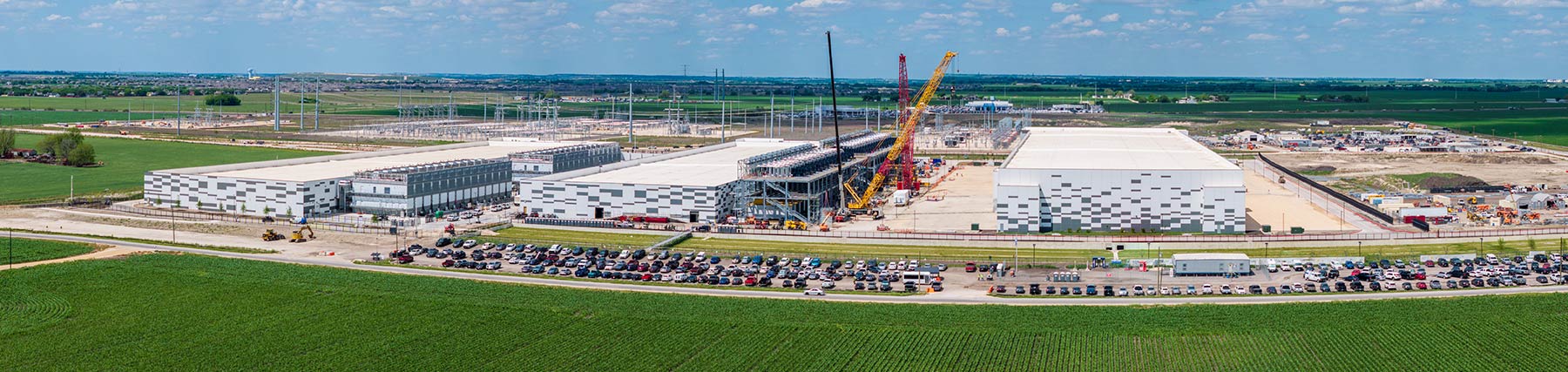
As pressures on energy, water, land, and infrastructure mount, many communities are reassessing how data centers fit into their long-term economic development strategies. Some states are aggressively pursuing projects tied to AI and digital infrastructure investment, while others are swinging to the other side of the spectrum and considering moratoriums or cost-sharing requirements. The result is an emerging, and sometimes heated, national debate over how to manage one of the fastest-growing sectors of the digital economy.
It is worth noting that concerns surrounding data center development are not entirely new. Economic developers and planners have long faced questions about balancing the benefits of large-scale investment projects with broader community priorities. However, rising demand has significantly intensified those conversations.
Energy-related concerns have become especially prominent. Questions from elected officials or community advocates focus on impacts to grid reliability and the potential effects on utility ratepayers.
At the same time, policymakers and residents are also scrutinizing the type of energy powering these facilities and the implications for carbon emissions and long-term sustainability goals. These pressures are driving calls from some state and local leaders for data centers to “bring their own power” rather than relying entirely on the existing electric grid.
In practice, this often means developers are exploring dedicated onsite or nearby generation assets, including natural gas facilities, battery storage, and renewable energy integration. Some jurisdictions are also seeking commitments related to renewable energy procurement or infrastructure investments that offset community impacts.
At the center of many of these discussions is the issue of economic tradeoffs and opportunity costs. Data centers generate significant property tax revenue and large-scale capital investment, but they generally employ relatively small permanent workforces once operational. As a result, some communities are questioning whether dedicating large amounts of land, infrastructure capacity, and incentive support to data centers may limit opportunities for other forms of development that generate more jobs or broader economic spillover effects.
This debate is especially relevant because the same industrial land suitable for data centers is often also in demand for logistics, warehousing, advanced manufacturing, and other industrial uses.
Communities must evaluate not simply whether they can attract data centers, but what type of economic activity they want to prioritize over the long term. Interestingly, these concerns do not necessarily extend to the broader AI and digital infrastructure supply chain.
A January 2026 article in WIRED observed that communities often oppose data centers while simultaneously welcoming facilities that build servers, electrical equipment, and other AI-related components.
Much of this difference appears tied to employment perceptions. Manufacturing facilities typically support larger workforces and more visible supply-chain activity, while data centers are often viewed as highly capital-intensive projects with comparatively limited long-term job creation.
In Virginia, local governments are increasingly creating their own data center zoning standards, siting regulations, and review processes.
In Maryland, lawmakers are considering additional regulations governing data center development.
Local residents in parts of Georgia and South Carolina have organized opposition campaigns around concerns related to noise and neighborhood compatibility.
In New Jersey, lawmakers approved legislation designed to charge data centers for electric system costs tied to rising energy demand.
In Maine, public concern over water and energy impacts is also spreading into rural communities. In 2026, the Maine legislature passed a one-year moratorium on new data centers in response to these concerns. However, the Governor vetoed it, and the Legislature failed to override the veto, so some towns are now considering passing their own moratoriums.
As public scrutiny of data center development intensifies, many companies are adopting new strategies to address community concerns and demonstrate broader economic and infrastructure benefits.
In January 2026, Microsoft announced support for efforts in some markets to establish higher electricity rates specifically for data centers, with the goal of reducing the likelihood that residential consumers would bear the costs of major infrastructure upgrades tied to AI-driven demand growth. Other companies are also experimenting with new approaches to energy management and grid stabilization.
In Virginia, a partnership involving NVIDIA, Digital Realty, and Emerald AI is piloting software that temporarily reduces AI workloads during peak grid stress. The effort reflects a broader industry push to make large-scale computing operations more responsive to grid conditions rather than functioning as inflexible sources of demand.
Developers are also investing in alternative energy sources and cleaner power. Google, for example, is supporting geothermal energy development in Nevada through partnerships with Ormat, Fervo, and NV Energy. The projects contribute electricity to the local grid that serves Google data centers, and use an innovative financing structure known as a Clean Transition Tariff.
Water consumption has become another major area of innovation. In response to concerns about water use and cooling demand, some developers are investing in alternative cooling technologies to reduce water intensity.
In Maine, LiquidCool Solutions is planning an AI-focused data center at the former Loring Air Force Base within the Loring Commerce Centre. Rather than relying on traditional air-conditioning systems, the facility plans to use immersion-cooling technology, which submerges servers in specialized cooling fluids and can significantly reduce water and energy requirements.
Beyond technology solutions, one of the clearest responses from the industry has been a growing emphasis on public discussions. As states and localities consider stricter regulations, industry organizations have acknowledged the need for more proactive communication with residents, utilities, and policymakers.
Dan Diorio, vice president of state policy at the Data Center Coalition, told WIRED that the organization recognizes the importance of “… being responsible and responsive neighbors in the communities where they operate.”
Data centers are rapidly becoming one of the defining economic development issues of the next decade. The status quo surrounding data center recruitment no longer reflects the scale of factors communities must face.
There is a growing awareness within the industry that future growth will depend not only on securing power and land, but also on building long-term public trust and demonstrating clear community value.
The communities that succeed will likely be those that move beyond viewing data centers solely as real estate projects and instead treat them as part of a larger strategy tied to regional competitiveness, infrastructure modernization, energy planning, workforce development, and long-term economic resilience.
The third article in our series will focus on what this means in practice for economic developers navigating these issues.
Learn about our industry analytics and strategy services
📍 Related Articles:
Jim Damicis is Senior Vice President at Camoin Associates. He has more than 30 years of experience using research and analysis to help professionals, communities, regions, states, and public and private organizations prepare for an emerging economic future. He has led a variety of projects at Camoin Associates, including local and regional economic development strategies, targeted industry analysis, workforce development, innovation economy, and evaluation and benchmarking. Jim is the former President of the Northeast Economic Development Association (NEDA) and has served in leadership roles for more than 10 years. He serves on the Federal Reserve of Boston’s New England Public Policy Advisory Committee and is an instructor for the International Economic Development Council’s (IEDC) annual strategic planning course. Jim is also a collaborator with Communities of the Future, focusing on economic transformation. He holds a Master of Public Policy and Administration degree from the Edmund S. Muskie School of Public Service at the University of Southern Maine and a Bachelor of Arts degree in Economics and Political Science from the University of Connecticut, Storrs.
Alexandra Tranmer, CEcD, is the Director of Industry and Workforce at Camoin Associates. She leads data-driven economic development strategies that help communities understand where they are competitive and how to act on that insight over the long term. Based in Upstate New York, Alex has spent more than a decade working with communities across New York State and throughout the country, from small rural regions to fast-growing metropolitan areas. She has published recent articles in Expansion Solutions and the Manufacturers Alliance blog, covering topics including life sciences, advanced manufacturing, and semiconductors. A trusted advisor to her clients, Alex frequently remains engaged beyond initial planning efforts to support implementation, adaptation, and long-term success.

Industry Analytics and Strategy
Following the COVID-19 pandemic, outdoor recreation is no longer in recovery mode and has matured into one of the most significant and durable economic sectors in the country. We take a look at recent trends, opportunities, challenges, and successes in the sector and offer guidance on how to grow your outdoor recreation economy.
Industry Analytics and Strategy
Evaluation and Benchmarking
Your resource for understanding today and looking toward tomorrow