


- Navigator
- Industry Analytics and Strategy
- Information Technology, Semiconductors, and AI
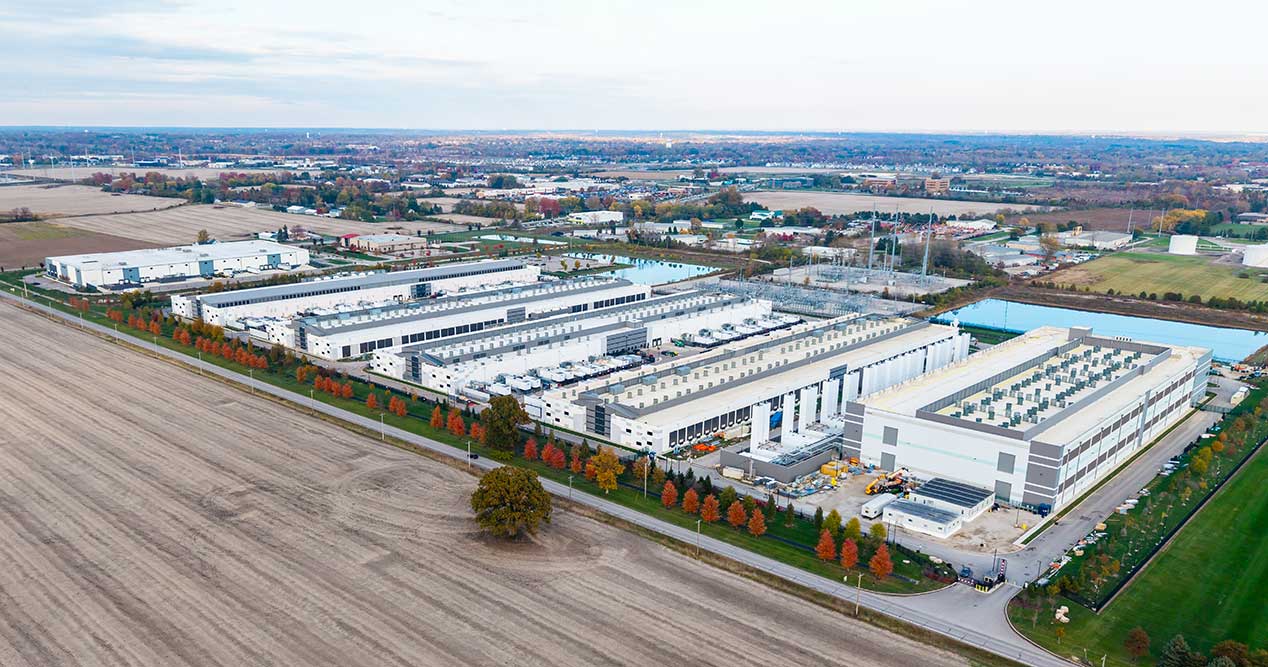 It is hard to open the front page of a newspaper today without reading about the expansion or development of a data center in nearly every corner of the country. The recent urgency driving industry growth right now is indisputable, but data centers are not a new phenomenon.
The team at Camoin Associates has tracked and written about data center trends and market conditions for the last 20 years. Through emerging industry strategies, we have provided clients with insights and suggested approaches to assess and attract data center investment, manage land use around data center development, and leverage existing data centers to drive economic activity in related sectors in Virginia, New York, Pennsylvania, and more.
What we found in our work over the last two decades remains true:
Digital content permeates our personal lives and the economy. This includes content related to streaming, coding, social media platforms, research, marketing, business services, personal services, health services, and education, among other applications. Additionally, artificial intelligence (AI) is creating new data and information at speeds far greater than previously demanded. These forces together create exponentially surging demand for the infrastructure and systems that move and store data, including data centers.
While expectations for constant data access and availability continue to rise, the siting of the physical infrastructure that stores and manages that data has become a flashpoint in communities from Maine to Virginia.
While specific concerns vary by location, several common elements drive community unease with the development of data centers:
This growing public concern is occurring at the same time data center demand is projected to increase significantly, including the need for new and expanded facilities.
This article is the first of a three-part series that will focus on recent and emerging trends in data centers from an economic development perspective. In this article, I will explain what data centers are, the different types of data centers, and trends in supply and demand.
In the second article, I will explore critical factors determining data center site location; what state, regions, and communities are doing to vet, encourage, or limit projects; and what developers and centers are doing in response to recent issues.
In the third and final article of the series, I will offer practical tips and tools to help your area consider, plan for, and act on opportunities that align with local economic development objectives.
One of the first things to understand regarding data centers and economic development is that not all data centers are alike. A data center, put simply, is a facility that houses equipment and technology for the storage of and access to data and applications.
According to Data Center Map, which tracks data centers worldwide, there are currently 10,967 data centers across 174 countries, of which 4,029 (36.7%) are located in the US.
The types of data centers vary based on size, uses, networks, technology, and scalability, among other factors. The following list from CISCO offers a layperson’s explanation of some of the differences:
AI Data Centers: AI data centers are specifically designed to support the demanding computational requirements of artificial intelligence workloads. Unlike traditional data centers, AI data centers prioritize parallel processing and optimized workflows to train and deploy machine learning models at scale. Minimizing latency is a key focus in AI data centers because real-time AI applications—such as predictive analytics and natural language processing—require rapid data processing and decision-making.
Enterprise Data Centers: Company-owned and operated, enterprise data centers are typically located on corporate campuses and tailored to serve internal users.
Managed Services Data Centers: These data centers are managed by a third party (such as a managed services provider) on behalf of a company. The company leases the equipment and infrastructure rather than buying them.
Colocation Data Centers: In colocation (“colo”) data centers, a company rents space within a data center owned by others and located off the company’s premises. The colo data center hosts the infrastructure: building, cooling, bandwidth, security, and so on, while the company provides and manages the components, including servers, storage, and firewalls.
Cloud Data Centers: In this off-premises form of data center, data and applications are hosted by a cloud services provider such as Amazon Web Services (AWS), Google Cloud Platform (GCP), Microsoft (Azure), IBM Cloud, or other public cloud provider, often within hyperscale data centers designed to efficiently support massive workloads and global scalability.
Edge Data Centers: An edge data center is a smaller, decentralized facility located closer to end users and devices. They are designed to process data locally, reduce latency, and support real-time applications across industries such as IoT, autonomous vehicles, and content delivery.
All these types of facilities remain in demand, and this will likely persist (and grow) over the next 10 years. Additionally, AI-related data centers and what are now termed hyperscale data centers are garnering attention.
Hyperscale data centers are fueled by the rapid growth of AI and the need to support this activity. “Hyperscalers” use distributed computer systems—essentially, teams of independent computers splitting up tasks across multiple machines to process high volumes of data. This is called hyperscale computing. Traditional data centers, on the other hand, prioritize centralized computer systems, which can often mean fewer but more powerful computers.
Regarding future demand, McKinsey & Company indicates that “Global demand for data center capacity can more than triple by 2030, with a compound annual growth rate (CAGR) of around 22 percent. In the United States, data center demand could grow by 20 to 25 percent per year over the same period. About 70 percent of that projected 2030 demand will come from hyperscalers.”
The recent and projected growth in data centers is being driven by multiple factors. These include:
This growth in demand comes at a time when data center vacancy rates are at a significant low. In 2025 in North America, “Primary market vacancy dropped to a record-low 1.6%, underscoring the continued strength of end-user demand, particularly from hyperscale and AI occupiers,” according to CBRE.
Regarding the future supply, McKinsey & Company indicates that “By 2030, data centers are projected to require $6.7 trillion worldwide to keep pace with the demand for compute power. Data centers equipped to handle AI processing loads are projected to require $5.2 trillion in capital expenditures, while those powering traditional IT applications are projected to require $1.5 trillion in capital expenditures. Overall, that’s nearly $7 trillion in capital outlays needed by 2030. More than 40 percent of this spending will be invested in the United States.”
CNN reports that “America’s tech giants are racing to be at the forefront of the AI boom. Meta said it spent $17 billion in capital expenditures — which typically refers to money spent on data centers and infrastructure — for the quarter ending in June 2025. Microsoft said it spent $24.2 billion for the quarter that ended last June, while Amazon said it would invest $15 billion in Northern Indiana to build new data center campuses, in addition to an $11 billion investment announced in 2024. And Bank of America in September estimated that companies’ annual spending on data center construction hit $40 billion in June.”
The result of this, from an economic development standpoint, is that data center development will expand into markets beyond traditional urban and suburban areas in Northern Virginia, Chicago, New York, Dallas, Atlanta, and Phoenix. In doing so, developers will be seeking more rural locations and locations with available land, power, and water.
At the same time that data center development is expected to expand beyond traditional markets, public officials and policymakers are pushing back on projects landing in their communities, halting what would otherwise be rapid expansion. This is just one factor that is contributing to the longer timelines for new data centers to come online.
Public concerns, along with the need to expand and secure energy sources and acquire large construction labor contingencies, mean that there are numerous hurdles to overcome before shovels are in the ground. Sightline reports that “Announced capacity for 2026 suggests another year of explosive growth for data centers. But our outlook on the market suggests that 30–50% of that pipeline is unlikely to come online before the end of the year.”
In my next article in this three-part series, I will examine the factors influencing data center site location decisions and delve deeper into the concerns driving the pushback against new data center development from the public and policymakers.
Learn about our Industry Analytics and Strategy services
📍 Related Articles:
Jim Damicis is Senior Vice President at Camoin Associates. He has more than 30 years of experience using research and analysis to help professionals, communities, regions, states, and public and private organizations prepare for an emerging economic future. He has led a variety of projects at Camoin Associates, including local and regional economic development strategies, targeted industry analysis, workforce development, innovation economy, and evaluation and benchmarking. Jim is the former President of the Northeast Economic Development Association, an instructor for the International Economic Development Council’s annual strategic planning course, and a collaborator with Communities of the Future, focusing on economic transformation. He holds a Master of Public Policy and Administration degree and a Bachelor of Arts degree in Economics and Political Science.
Alexandra Tranmer, CEcD, is the Director of Industry and Workforce at Camoin Associates. She has an Honors Bachelor of Arts degree and a Master of Science degree in Planning (MScPl) from the University of Toronto in Ontario, Canada. As a senior project manager, Alex has led complex strategic planning efforts in geographies ranging from bustling urban centers to pastoral tourist destinations, requiring adept stakeholder management and collaboration. She works with clients to balance the competing interests of stakeholders while ultimately helping them develop an ambitious yet achievable plan under their current organizational climate.

Real Estate Development and Housing
Housing is essential infrastructure in rural communities, small towns, and micropolitan areas. It shapes workforce stability, economic resilience, and long‑term community viability. Explore case studies, actionable tools, and a step-by-step guide for meeting housing needs in these unique markets.
Industry Analytics and Strategy

Prospecting and Business Attraction
Your resource for understanding today and looking toward tomorrow